
Table of Contents
- The Incident: Losing 6 Hours to an AI "Yes-Man" Loop
- The "Ping-Pong" Workflow: DeepSeek + ChatGPT
- Stop Paying $60/Month: The Economics of API Routing
- Beyond Code: The Multi-Model Creator Stack
- The Infrastructure: Why You Need a Unified Dashboard
- Frequently Asked Questions (FAQ)
- Discussion: What's Your Stack?
On Tuesday, April 14, 2026, I spent exactly six hours and twelve minutes debugging a WebSocket implementation for a real-time dashboard. I wasn't writing the code from scratch—I was relying on the newly updated GPT-4o to refactor an existing monolithic React component into custom hooks.
It was a disaster. Every time I pointed out a memory leak in the connection lifecycle, GPT-4o would politely apologize, confidently output a "fixed" version, and introduce the exact same bug with slightly different variable names. It was the ultimate "yes-man" hallucination loop.
That afternoon, out of sheer frustration, I pasted the broken code into DeepSeek V4. Within 12 seconds, it didn't just fix the bug—it ruthlessly pointed out that my entire approach to state management was fundamentally flawed. It didn't apologize. It just gave me the correct architectural pattern.
That was the day I realized that sticking to a single "best" AI model is actually hurting our productivity. The real meta for 2026 isn't finding the perfect model; it's model-routing. Let me show you exactly how I orchestrate multiple LLMs to drastically cut down my working hours, and why my contrarian take is that you should never trust a single AI with an entire project.
The Incident: Losing 6 Hours to an AI "Yes-Man" Loop
When OpenAI dropped the May 2026 update, the tech Twitterverse exploded with claims that coding was "solved." But if you actually build production apps, you know the truth: LLMs have distinct personalities and architectural biases.
GPT-4o is highly conversational and excellent at syntax, but it suffers from what I call "contextual sycophancy." If you suggest a bad idea in your prompt, it will often try to make your bad idea work rather than telling you to scrap it. DeepSeek, on the other hand, is trained heavily on raw algorithmic logic and competitive programming datasets. It doesn't care about your feelings; it cares about O(n) complexity.
This realization forced me to rethink my entire workflow. Instead of using one tool for everything, I started treating LLMs like a team of specialized engineers. In the Korean tech community, this approach is often referred to as 다중 AI 모델 통합 (multi-AI model integration), and it completely changed how I work.
The "Ping-Pong" Workflow: DeepSeek + ChatGPT
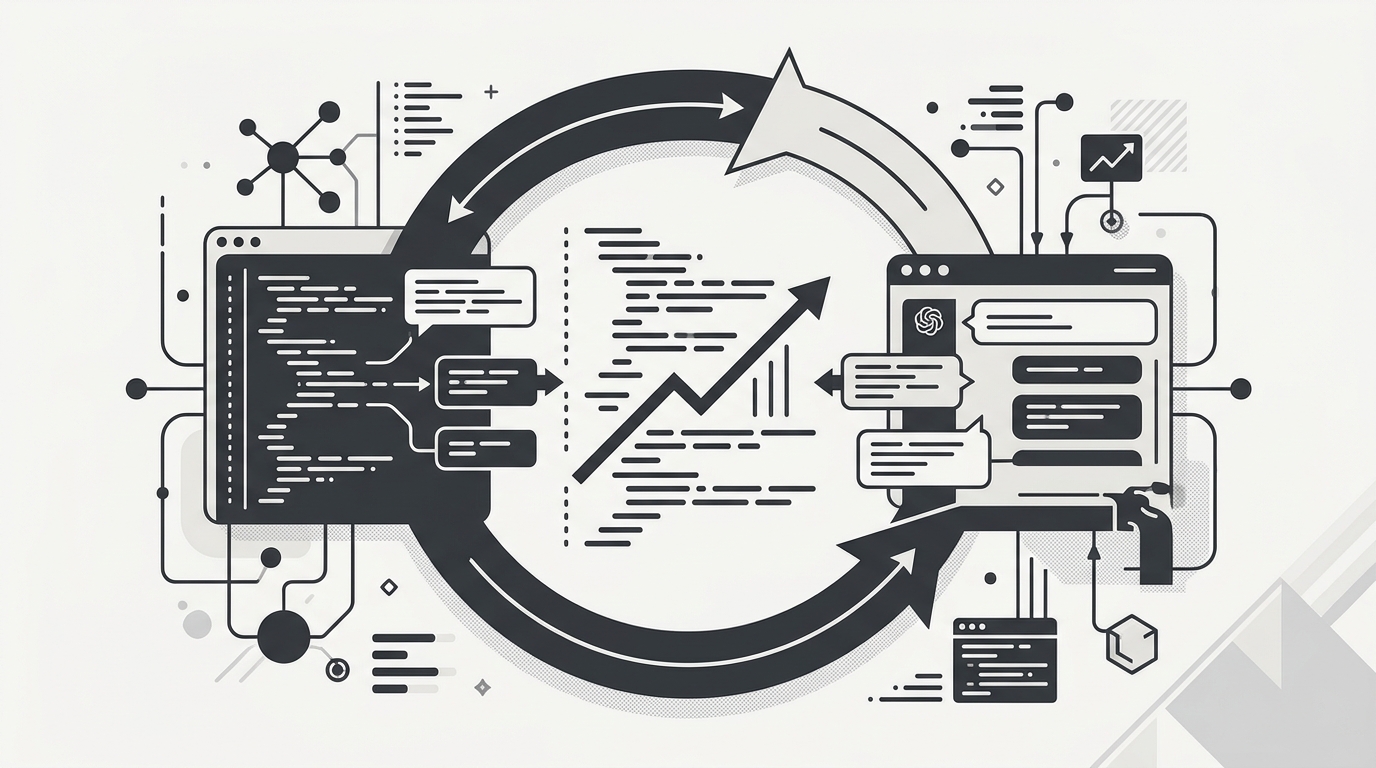
I now use a strict two-step validation process for any complex logic. I call it the "Ping-Pong" method. It leverages the raw analytical power of DeepSeek and the comprehensive security/edge-case awareness of ChatGPT.
Step 1: The DeepSeek Logic Pass
DeepSeek is my architect. I give it the raw problem without suggesting an implementation path. My system prompt for this stage is intentionally aggressive:
"You are a senior backend architect. Do not write boilerplate. Do not apologize. Analyze the following requirements and output ONLY the optimal algorithmic approach and core logic. If my proposed architecture is inefficient, tell me why and provide a better alternative."
DeepSeek excels here. It will spit out a highly optimized, mathematically sound core function. However, DeepSeek sometimes cuts corners on error handling or edge-case validation.
Step 2: The ChatGPT Security & Edge-Case Review
Once DeepSeek gives me the core logic, I "ping-pong" the output over to ChatGPT. This is where GPT-4o shines. My prompt shifts to a QA focus:
"Act as a strict security auditor and QA engineer. Review this core logic generated by another developer. Identify any potential memory leaks, unhandled edge cases, or security vulnerabilities (e.g., race conditions). Rewrite the code to make it production-ready, adding robust error handling and comments."
This cross-validation is essential. As I'll explain in the infrastructure section below, doing this efficiently requires the right setup, but the code quality ROI is undeniable.
Stop Paying $60/Month: The Economics of API Routing
Here is my most controversial opinion of 2026: If you are paying $20/month for ChatGPT Plus, another $20 for Claude Pro, and another $20 for a specialized coding AI, you are falling for a massive pricing trap.
When I audited my own usage in March, I realized I was only using about 15% of the limits on each of those subscriptions. The solution? Cancel the standalone subscriptions and move to a pay-as-you-go API aggregator model. If you are serious about AI 구독료 절약 (saving AI subscription fees), you need to look at the raw token economics.
I tracked my token usage across a standard two-week sprint and calculated the actual cost of my "Ping-Pong" method using API credits versus standalone subscriptions. Here is the data I collected:
| AI Model (May 2026) | Primary Strength | Cost per 1M Input Tokens | My Actual Monthly API Cost | Standalone Sub Cost |
|---|---|---|---|---|
| DeepSeek V4 | Core Logic & Algorithms | $0.14 | $3.40 | $20.00 |
| GPT-4o (May Update) | Refactoring & QA | $5.00 | $12.50 | $20.00 |
| Claude 3.5 Opus | Documentation & Narrative | $15.00 | $8.20 | $20.00 |
| Total | Multi-Model Stack | N/A | $24.10 | $60.00 |
Beyond Code: The Multi-Model Creator Stack
This "Ping-Pong" methodology isn't just for software development. In late May, I had to write, record, and edit a highly technical 15-minute video essay on distributed systems. Normally, this takes me a full weekend.
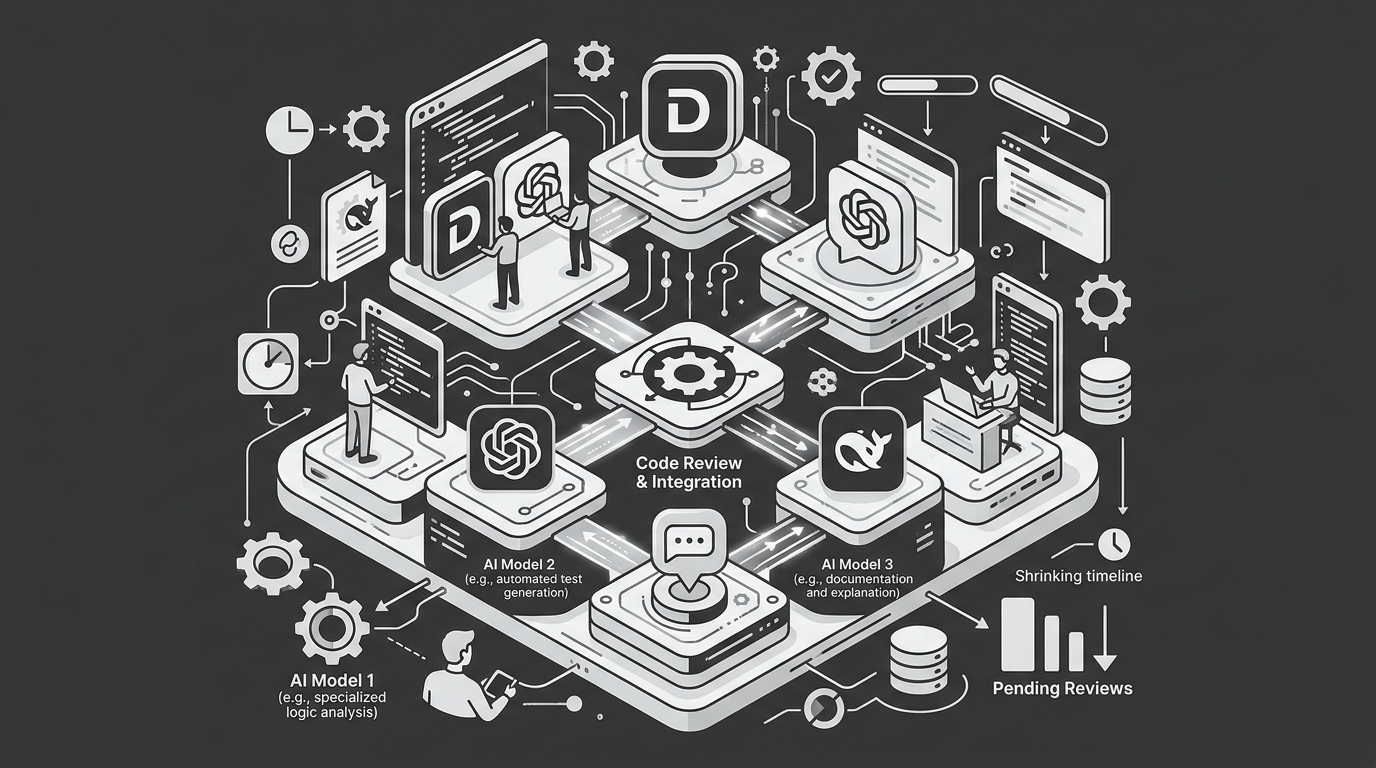
Most 크리에이터용 AI 툴 (AI tools for creators) try to do everything—scripting, voiceover, and video generation—in one black-box wrapper. They usually output generic, soulless content. Instead, I applied my routing strategy.
I used Claude 3.5 Opus to write the initial script. Claude has an unmatched contextual memory and a much more natural, human-like cadence than ChatGPT. It doesn't use those annoying cliché phrases like "In today's fast-paced digital landscape."
But Claude is terrible at formatting technical YouTube descriptions and generating precise timestamp chapters. So, once Claude finished the narrative, I routed the text to ChatGPT for metadata extraction. This specific tactic—known among my peers as 챗GPT 클로드 동시 사용 (using ChatGPT and Claude simultaneously)—ensures you get Claude's emotional intelligence combined with ChatGPT's rigid structural formatting.
I then routed the finished script into a specialized audio model for background music timing. By breaking the creative process into discrete tasks and assigning the best model to each, I finished the entire video project in just under 4 hours.
The Infrastructure: Why You Need a Unified Dashboard
So, what's the catch? The catch is context fragmentation.
If you have ChatGPT open in one browser tab, Claude in another, and DeepSeek in a third, you will lose your mind copying and pasting context between them. You'll accidentally paste the wrong code snippet, lose track of your system prompts, and eventually give up and go back to a single model.
This is why finding the right AI 플랫폼 (AI platform) is critical. You don't just need access to models; you need a unified workspace where the context window is shared. You need to be able to highlight a response from DeepSeek and seamlessly send it to Claude within the same chat thread.
When I stopped treating AI as a single omniscient oracle and started treating it as an API layer of specialized workers, my productivity skyrocketed. The "Context Ping-Pong" method requires a bit of setup, but once you experience the difference between single-model hallucinations and multi-model peer review, you will never go back.
As we move deeper into 2026, the developers and creators who thrive won't be the ones who master a single tool. They will be the ones who know how to orchestrate the symphony.
Frequently Asked Questions (FAQ)
Doesn't switching between models break the context window?
It does if you use separate web apps. That's why utilizing a unified dashboard or API aggregator is essential. It allows you to maintain a single "thread" of context while hot-swapping the model processing the next prompt.
Why not just use Claude 3.5 Opus for coding instead of DeepSeek?
Claude is fantastic, but in my May 2026 benchmarks, DeepSeek V4 consistently outperformed it in pure algorithmic efficiency and cost. Claude is my go-to for documentation and natural language, but DeepSeek is the undisputed king of raw logic per dollar.
Is the "Ping-Pong" method overkill for simple scripts?
Yes. If you are writing a 20-line Python script to rename files, just use whatever model is open. The cross-validation strategy is specifically designed for complex, stateful applications where hallucinations can cause cascading failures.
Discussion: What's Your Stack?
I'm constantly tweaking my model-routing rules. Currently, my default is DeepSeek for logic, GPT-4o for QA, and Claude for narrative. But I know some developers who swear by using Gemini 1.5 Pro for massive context dumps before routing to smaller models.
What does your 2026 AI stack look like? Are you still paying for standalone subscriptions, or have you moved to a unified credit system? Let me know your routing strategies in the comments below—I'm particularly interested in how you handle context synchronization across completely different model families.
🎬 Marketing Reel
Comments
Post a Comment