
Table of Contents
- The $384/Month Illusion: Why Individual AI Accounts Are Killing Your Team
- The "April 14th" Context Collapse
- Enter the Aggregator: Building a Team-Wide 통합 AI 플랫폼
- 챗GPT 클로드 동시 사용: The Multi-Model Relay Framework
- 멀티모달 AI 활용법: Cross-Pollinating Text, Code, and Audio
- Solving the Contractor Problem: Beyond the 챗GPT 무료 체험
- The Real Secret to AI 구독료 절약
- Frequently Asked Questions (FAQ)
- Let's Discuss
The $384/Month Illusion: Why Individual AI Accounts Are Killing Your Team
I have a highly unpopular opinion about how agencies are using AI in 2026: Buying your team individual ChatGPT Plus or Claude Pro accounts is the modern equivalent of buying them individual filing cabinets and forbidding them from looking at each other's files. It feels productive, but it is actively destroying your team's alignment.
In April 2026, I audited our 4-person agency's software expenses. We were bleeding $384 a month on fragmented AI subscriptions. Everyone had ChatGPT Plus. Two developers insisted on Claude Pro for the 3.5 Sonnet updates. Our designer was paying for Midjourney, Suno, and an array of video generation tools.
But the financial leak wasn't the actual crisis. The real crisis was what I call "Context-Bleed." Because everyone was working in their own siloed AI interfaces, our project context was scattered across 14 different browser tabs and 4 different user accounts. We were paying premium prices to miscommunicate faster than ever before.
The "April 14th" Context Collapse
Let me tell you exactly when I realized our setup was a disaster. On April 14th, we were rushing to deliver a 45-page technical specification for a fintech client. My lead developer was using Claude 3 Opus to architect the database schema. My project manager was using the GPT-4o May update to draft the client-facing executive summary.
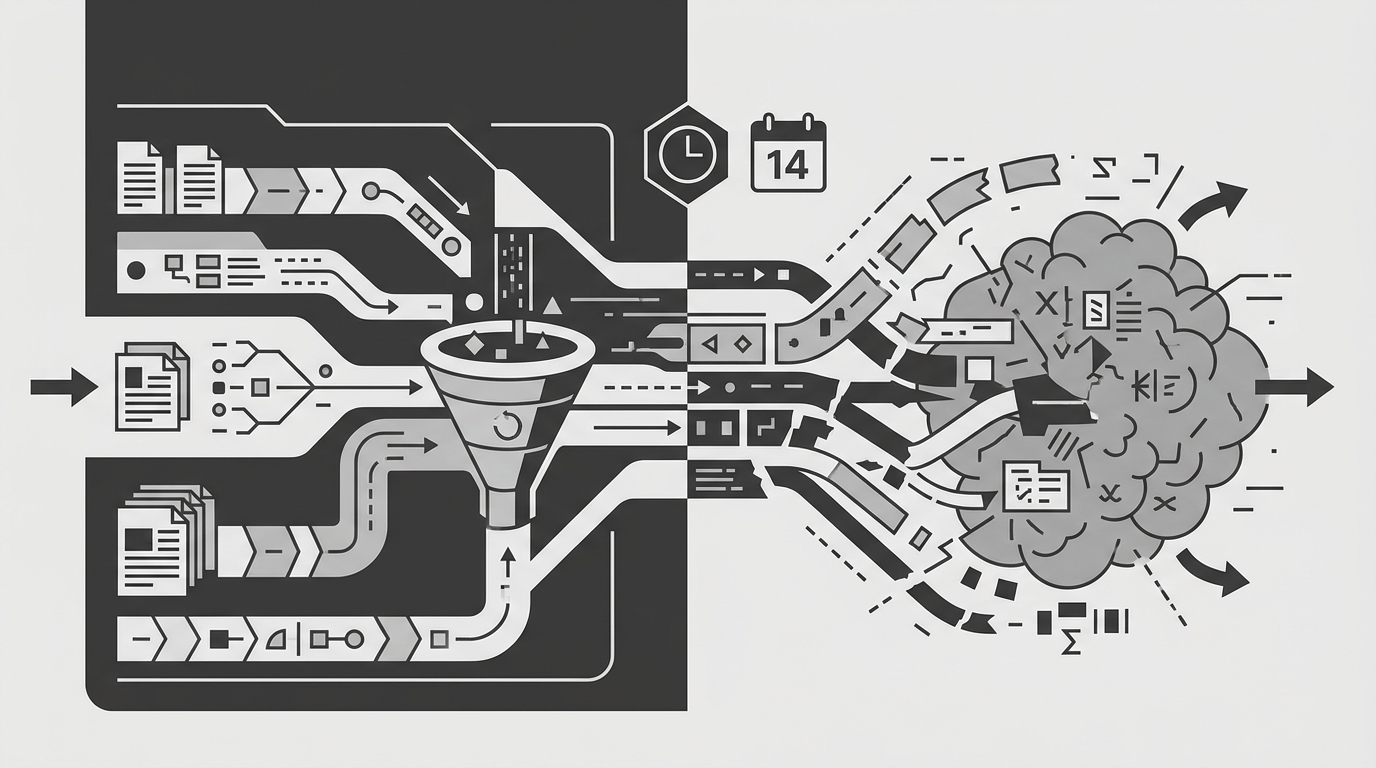
Because they were prompting in isolation, the AI models hallucinated two completely different API endpoint structures. Claude optimized for security, while GPT-4o optimized for ease of integration. Neither human caught the discrepancy because they implicitly trusted their respective "smart assistants."
We caught the error 45 minutes before the client presentation. We spent a frantic hour manually reconciling the documents. That was the day I realized that standalone AI subscriptions are built for single players, not multiplayer teams.
Enter the Aggregator: Building a Team-Wide 통합 AI 플랫폼
After the April 14th incident, I started looking into how overseas engineering teams were solving this. In the Korean tech community, there's a rapidly growing standard called a 통합 AI 플랫폼 (Integrated AI Platform). Instead of subscribing to OpenAI, Anthropic, and Google separately, you route your team through a single aggregator dashboard.
This isn't just about paying one bill instead of five. It's about unified task history. When my developer generates a code snippet using DeepSeek or Claude, that prompt and output are logged in a shared workspace. When I need to write the documentation for that code, I don't have to start from scratch—I just continue the thread using Gemini 1.5 Pro to summarize their exact output.
| Setup Type | Monthly Cost | Context Retention | Primary Bottleneck |
|---|---|---|---|
| Siloed Subscriptions (Status Quo) | $320 - $400+ | 0% (Isolated to individuals) | Copy-pasting between Slack and AI tabs |
| Shared Single Account | $20 - $40 | High, but chaotic | TOS violations, rate limits, overwritten chats |
| Unified Aggregator Dashboard | $120 - $145 (Credit-based) | 100% (Cross-model shared history) | Initial team retraining and habit breaking |
By moving to a unified dashboard, we reduced our processing time for multi-step projects from 45 minutes to roughly 12 minutes. The AI became a shared team member, rather than five separate personal assistants.
챗GPT 클로드 동시 사용: The Multi-Model Relay Framework
One of the biggest workflow shifts was mastering 챗GPT 클로드 동시 사용 (simultaneous use of ChatGPT and Claude) within a single project pipeline. Last Tuesday, we had to analyze a massive, messy CSV file of user feedback and turn it into actionable UX tickets.
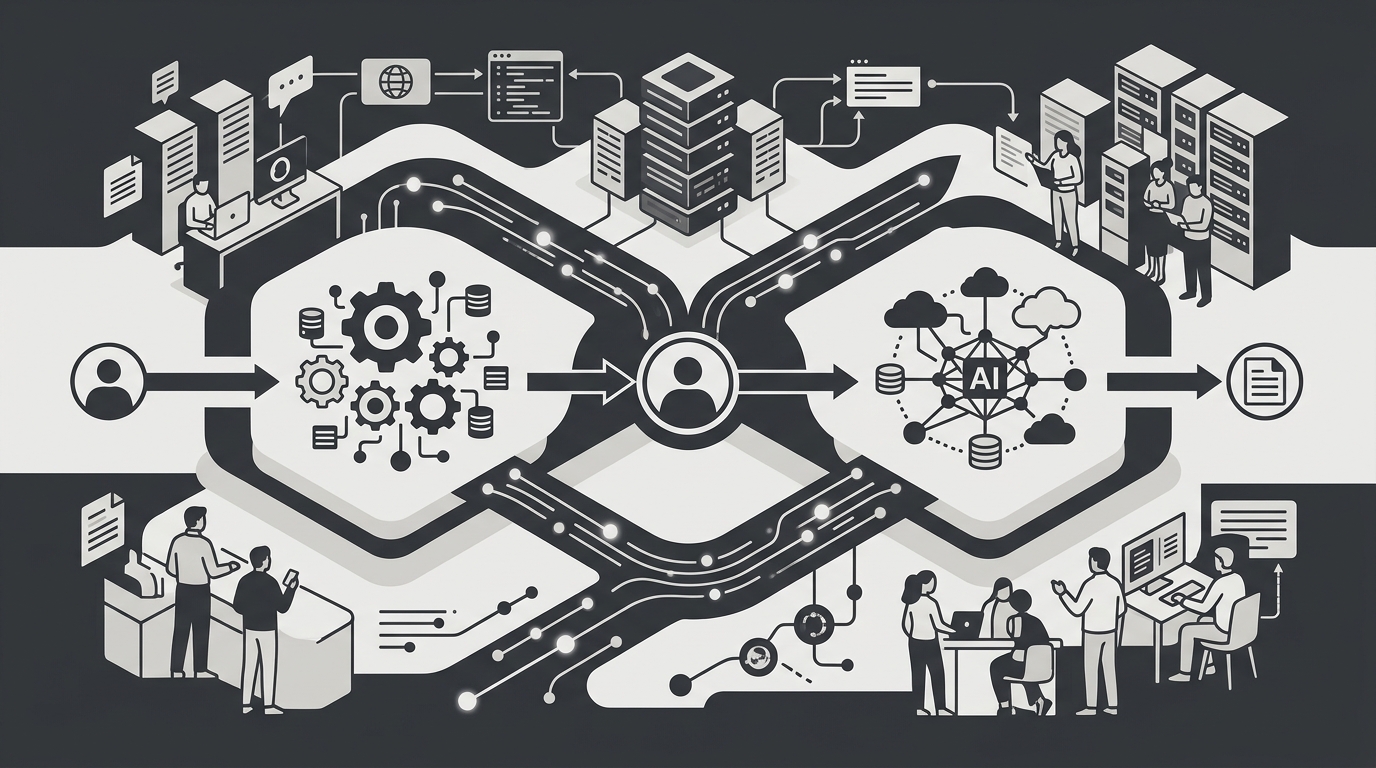
If you do this in one model, it usually chokes halfway through. Here is our exact "Relay Framework":
- Data Structuring (Gemini 1.5 Flash): We feed the raw CSV into Gemini because its massive context window handles unstructured data dumps better than anything else. We ask it to output a clean, categorized JSON.
- Logical Analysis (Claude 3.5 Sonnet): We pass that JSON directly to Claude within the same dashboard. Claude is ruthlessly logical. We ask it: "Identify the top 3 UX friction points based on this data."
- Client Communication (GPT-4o): Finally, we switch the model dropdown to GPT-4o and say, "Draft a polite email to the client explaining these 3 friction points and our proposed solutions."
멀티모달 AI 활용법: Cross-Pollinating Text, Code, and Audio
The real magic of a unified workspace happens when you step outside of text. Our 멀티모달 AI 활용법 (multimodal AI utilization) completely changed how we pitch marketing campaigns. We no longer send clients dry text documents.
Because our dashboard integrates audio and visual models, the workflow is seamless. I'll have Claude write a 30-second commercial script. Without leaving the interface, I copy the emotional tone of that script and feed it into Suno to generate background music. I then use an integrated video model to generate storyboard frames based on Claude's scene descriptions.
What used to take three days of coordinating between a copywriter, a sound designer, and a visual artist now takes me about two hours on a Tuesday morning. The key is that the context never leaves the dashboard. The video AI knows exactly what the text AI wrote.
Solving the Contractor Problem: Beyond the 챗GPT 무료 체험
Every agency deals with fluctuating headcounts. You bring on a freelance designer for two weeks, or an intern for the summer. In the past, we'd either tell them to use the 챗GPT 무료 체험 (ChatGPT free trial)—which limits them to older models and strict rate limits—or we'd buy them a $20 subscription that we'd inevitably forget to cancel.
With a credit-based aggregator platform, this problem vanishes. I simply add the contractor to our workspace and allocate them a specific credit limit. They get instant access to GPT-4o, Claude 3.5, and DeepSeek. I can see exactly what prompts they are running, which helps me course-correct their work asynchronously.
When their contract ends, I revoke access with one click. No lingering subscriptions. No lost data. The prompt history stays in our agency's repository forever.
The Real Secret to AI 구독료 절약
When people talk about AI 구독료 절약 (AI subscription savings), they usually focus on skipping a few lattes to afford a $20 monthly fee. That is small-picture thinking.
By moving our 4-person team to a pay-per-use unified dashboard, our hard costs dropped from $384 to an average of $145 per month. That's a 62% reduction in software overhead. But the real savings isn't the $239 we keep in the bank.
"The true cost of AI isn't the subscription fee. It's the cognitive load of managing fragmented context across isolated tools. Unifying your models is the only way to scale team intelligence."
The real savings is the 18 hours a week we no longer spend reconciling hallucinated documents, copy-pasting prompts between Slack channels, and managing subscription logins. We stopped treating AI like a personal tool and started treating it like shared team infrastructure.
Frequently Asked Questions (FAQ)
Q: Don't you hit rate limits faster when the whole team shares a credit pool?
A: Actually, the opposite. Because we aren't bound to one provider's artificial limits, if OpenAI throttles us, we just switch the dropdown to Anthropic and keep working. The aggregator handles the API routing seamlessly.
Q: Is it secure to have all team prompts in one dashboard?
A: It is significantly more secure than having your proprietary company data scattered across four different employees' personal OpenAI accounts. A unified workspace gives you centralized admin control over data retention.
Q: What happens if a specific model updates its features?
A: Aggregators usually pull in API updates within 24-48 hours. When GPT-4o dropped its May update, we had access to it in our unified dashboard before some of my peers even got it rolled out to their native ChatGPT Plus accounts.
Let's Discuss
I know a lot of developers who are fiercely protective of their native Claude or ChatGPT interfaces. They hate the idea of moving to an aggregator. But from an agency operations standpoint, I can never go back to the siloed model.
- How is your team currently handling shared AI context? Are you still copy-pasting into Slack?
- Have you ever experienced a "Context-Bleed" incident where two different models gave your team conflicting project directions?
Drop your experiences in the comments below. I'm especially curious to hear from teams larger than 10 people—how are you managing the subscription chaos in 2026?
Comments
Post a Comment