The 14-Minute "Cross-Examination" Protocol: Why I Stopped Paying for Standalone AI Subscriptions in 2026

Table of Contents
- The $12,000 Mistake That Changed My Stack
- The "Cross-Examination" Protocol: Using ChatGPT and Claude Simultaneously
- Real-World Test: Fixing the "Robot Voice" in AI Resume Writing
- The Death of the "Free AI Tools Collection"
- The Brutal Math of 2026: AI Subscription Cost Reduction
- When This System Fails (And How I Fix It)
- Frequently Asked Questions
- Discussion: What's Your Stack?
The $12,000 Mistake That Changed My Stack
Last Tuesday (June 2, 2026), I almost sent a client a strategy report that would have cost them $12,000 in wasted ad spend. Why? Because the shiny new GPT-4o (May update) confidently hallucinated a non-existent consumer trend in their Q1 analytics data.
It didn't just make up a number; it fabricated an incredibly convincing narrative around that number, complete with seasonal justifications. If I hadn't developed a habit of running critical data through a secondary model, I would have signed my name to pure fiction.
The prevailing advice in our industry is to pick your favorite AI model, learn its quirks, and master prompt engineering for that specific ecosystem. I strongly disagree. In 2026, loyalty to a single AI model is a massive liability. You don't need better prompts; you need an adversarial workflow.
The "Cross-Examination" Protocol: Using ChatGPT and Claude Simultaneously
After the analytics scare, I fundamentally changed how I work. I no longer treat AI as a solo genius. I treat it as a junior employee whose work needs to be audited by a hostile reviewer. I call this the Cross-Examination Protocol.

Here is how it actually works in practice:
- The Generator: I use GPT-4o for the initial heavy lifting. It is still the fastest at parsing messy, unstructured data and generating a comprehensive first draft.
- The Interrogator: I immediately feed that output into Claude 3.5 Sonnet. My prompt is never "improve this." My prompt is: "You are a skeptical auditor. Read this analysis. Find the three weakest logical links. Point out any data that seems mathematically improbable. Do not rewrite it; just tear it apart."
- The Arbiter: I take Claude's critique back to GPT-4o (or Gemini 1.5 Pro) and ask it to defend itself or correct the errors.
Using ChatGPT and Claude simultaneously like this reduces my error rate to near zero. It adds about 14 minutes to my processing time, but it saves me hours of embarrassing client revisions down the line.
Real-World Test: Fixing the "Robot Voice" in AI Resume Writing
Let me give you a non-technical example where this adversarial approach shines. In April, I was helping a junior developer with AI resume writing. He had used ChatGPT to rewrite his bullet points, and the result was disastrous. It was filled with words like "spearheaded," "revolutionized," and "delved." It screamed "I didn't write this."
Instead of trying to coax ChatGPT into sounding human—which rarely works—we used the Cross-Examination Protocol.
We fed ChatGPT's generated resume into Claude with this prompt: "Read this resume. Highlight every phrase that sounds like generic AI corporate speak. Rewrite those specific bullet points to sound like a tired, pragmatic senior engineer wrote them, focusing strictly on measurable outcomes without adjectives."
The Death of the "Free AI Tools Collection"
If you look at my browser history from early 2025, it was an embarrassing mess of bookmarks. I had a massive Notion database labeled "Free AI Tools Collection" featuring 40 different wrappers—one for SEO meta tags, one for YouTube descriptions, one for code formatting.
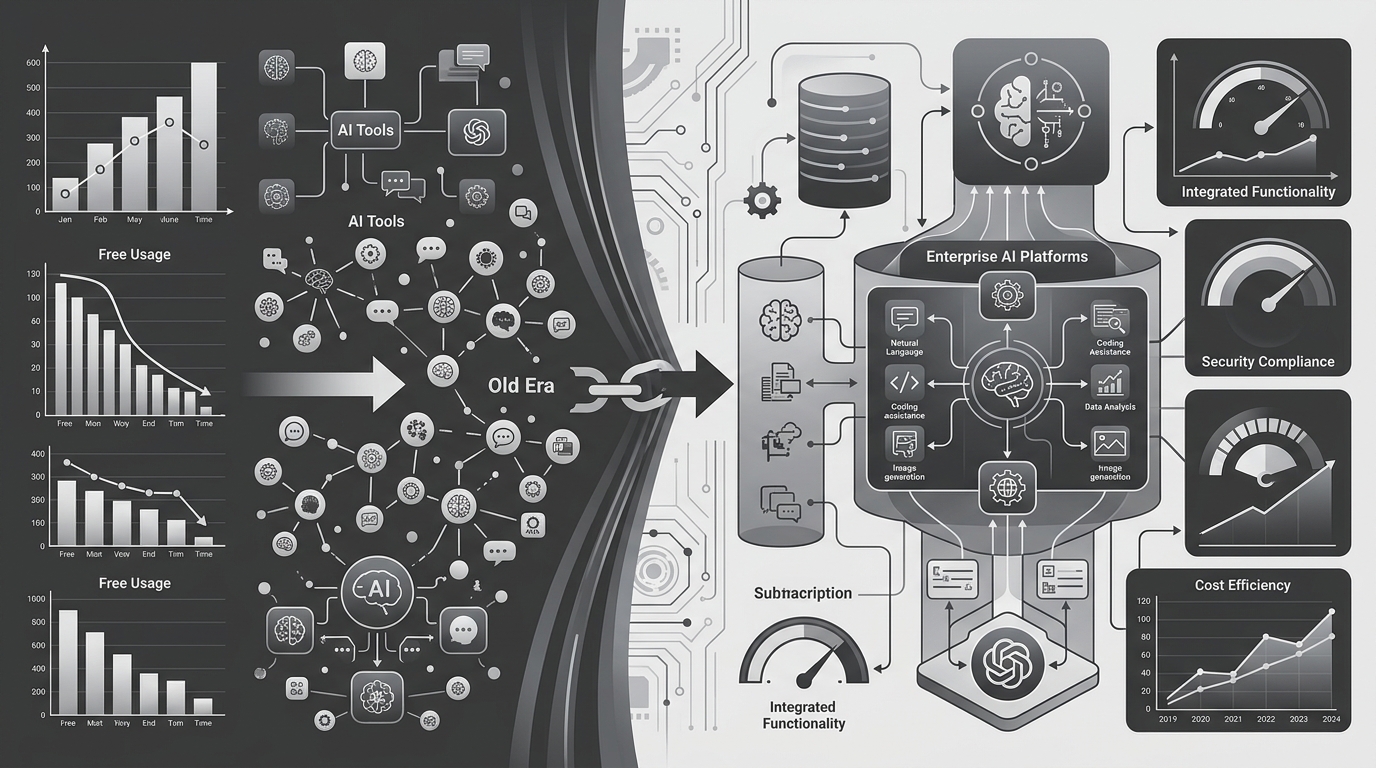
I deleted that entire database two months ago.
Why? Because context switching is the silent killer of productivity. Moving data between a specialized text summarizer, a separate grammar checker, and a distinct coding assistant breaks your mental flow. More importantly, you lose the conversational context at every step.
The future is AI platform integration. Instead of hunting for free, limited-use wrappers, I now route everything through a single unified interface that lets me ping different foundational models without leaving the window. The workflow is entirely centralized, which means the AI retains the context of my project whether I'm generating Python scripts or writing an email to a client.
The Brutal Math of 2026: AI Subscription Cost Reduction
Here is where my workflow hits a massive roadblock for most freelancers: paying for all these models individually is financial suicide.
If you want to run the Cross-Examination Protocol properly, you need access to the top-tier versions of these models. Let's look at the actual cost of maintaining standalone subscriptions in 2026.
| AI Service | Standalone Monthly Cost | My Actual Usage (Tokens/Mo) | Pay-Per-Prompt Equivalent |
|---|---|---|---|
| ChatGPT Plus (GPT-4o) | $20.00 | High (Main Generator) | ~$6.50 |
| Claude Pro (Sonnet 3.5) | $20.00 | Medium (The Auditor) | ~$4.20 |
| Gemini Advanced | $19.99 | Low (Occasional Research) | ~$1.10 |
| Image/Video Generation | $30.00+ | Sporadic | ~$3.00 |
| Total Monthly Cost | ~$89.99/mo | - | ~$14.80/mo |
I was paying roughly $1,080 a year just to keep my tabs open. I realized I was subsidizing the heavy users. On days when I was doing deep client calls, I wasn't touching my AI subscriptions, but the meter was still running.
My biggest breakthrough in AI subscription cost reduction wasn't downgrading to free models—it was migrating to a unified, pay-as-you-go credit platform. By using an aggregator interface, I can query GPT-4o, cross-check with Claude, and occasionally pull in Gemini, all while paying strictly for the compute I consume. I cut my SaaS bill by 78% overnight, and my workflow actually got faster because I stopped managing multiple logins.
When This System Fails (And How I Fix It)
I promised to be honest, so I have to admit: the Cross-Examination Protocol is not flawless.
Last month, while debugging a complex React component, I got stuck in an "AI Death Loop." GPT-4o provided the code. I asked Claude to audit it. Claude found a supposed memory leak and rewrote it. I fed it back to GPT-4o, which claimed Claude's fix broke the state management and reverted it back to the original.
They argued in circles for 20 minutes while I watched, paralyzed.
Here is what I learned: Never let the AIs debate architecture. When models disagree fundamentally on structural logic, you have to step in and act as the senior engineer. Cross-examination is brilliant for catching data hallucinations and tone issues, but for subjective architectural decisions, you must be the final arbiter. Do not abdicate your decision-making power to the consensus of two language models.
Frequently Asked Questions
Does using multiple models take too much time?
Initially, yes. But once you set up a unified dashboard where you can run prompts side-by-side without switching tabs, it takes seconds. The time saved on avoiding revisions heavily outweighs the extra prompting time.
Can I do this with the free tiers?
You can, but the context limits on the free tiers will break the workflow for anything longer than a short email. If you are analyzing data or writing code, you need the premium models—which is why I advocate for pay-per-prompt credit systems rather than subscriptions.
Which model is the best "auditor"?
In my experience as of June 2026, Claude 3.5 Sonnet is significantly better at finding logical flaws and inconsistencies than GPT-4o. GPT-4o is a better creator; Claude is a better editor.
Discussion: What's Your Stack?
The days of relying on a single AI assistant are over. The "Frankenstein" stack of 20 different free tools is equally dead. The middle ground—unified interfaces with adversarial prompting—is where real professional work is happening right now.
"In 2026, loyalty to a single AI model is a massive liability. You don't need better prompts; you need an adversarial workflow."
I'm curious about how you are managing this transition. Have you caught your primary AI model hallucinating recently? Are you still paying for standalone $20/month subscriptions, or have you moved to a consolidated platform? Let me know in the comments below.
Comments
Post a Comment